

While any type of movement is beneficial to your health and wellness, resistance training is the king of all exercise. It is the best way to improve your body composition (the way you look). It also has an endless list of proven health benefits including: improves heart health, lowers your risk of injury due to added strength and mobility, decreases your risk of falls, helps manage your blood sugar levels, greater flexibility, makes your bones stronger, improves brain health, lowers risk of disease and many other benefits.
I use the app called JEFIT to track my workouts and there are many other apps out there that do the same thing. You can also use a pen and paper to track your workouts but I like the app because it always remembers the weight and reps I used in the previous workout and the rest timer is built into the app. There are many training programs on the app, so I would highly recommend it whether you are a beginner, novice or advanced weight lifter.
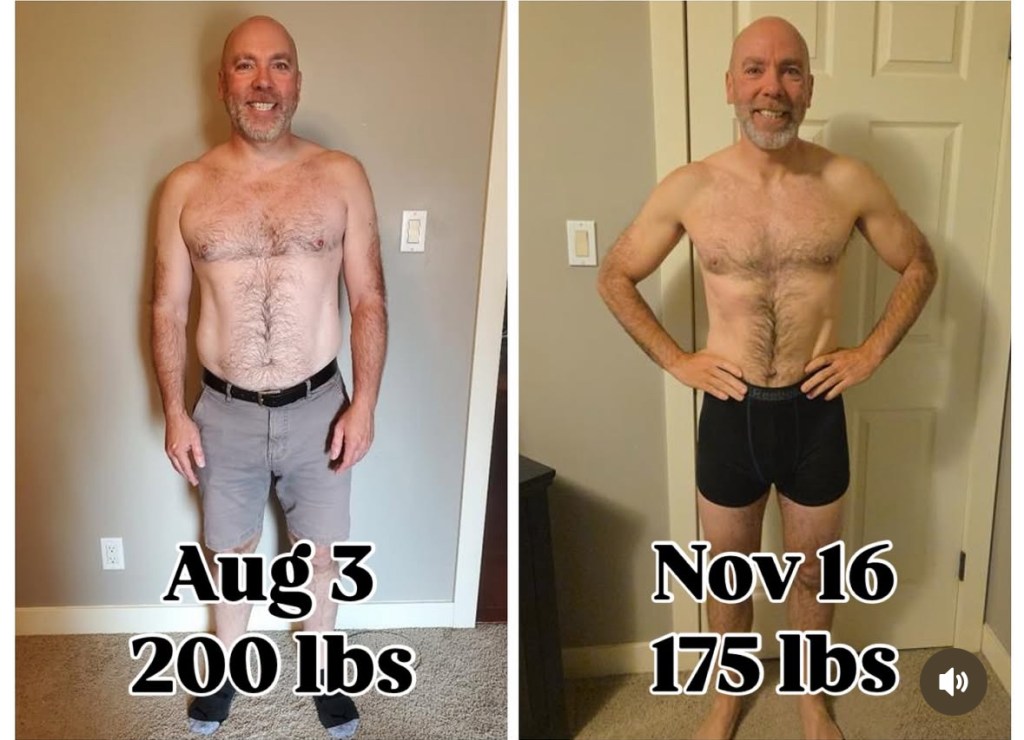
I fell in love with weight training early on and have been consistently working out for over 15 years. There are an infinite combination of exercises and I really enjoy making my own workout programs. There is not one perfect workout program but here are some key rules to resistance training.
Rule 1: Track your workouts and individual lifts. It is very important that you show up to the gym with a plan of attack, otherwise you will be overwhelmed by which exercises to do, how long to rest, and you will become unmotivated. Tracking your workouts allow you to make progress and actually see the progress you are making. Seeing those numbers go up means that you are getting stronger, which is the catalyst behind your muscles growing. Have a plan going in.
Rule 2: Progressive Overload. Progression is the key to your muscles growing. Your muscles need to be stimulated or taxed progressively more over time. The best way to do this is through Progressive Overload. For example, let’s say your bench press on day 1 was as follows: 135lbs X 10reps, 135lbs X 10 and 135lbs X 10. The next time you do the Bench Press (after adequate rest), you should strive to do 135lbs X 11 reps. If you don’t track your workouts, you will have no idea what you did in the previous workout and you will be simply guessing. You will never progress if you are guessing. Always track and always strive for one more rep. Let’s say you are working in a rep range of 8-12. Once you do all three sets of the bench press at 12 reps, it’s time to up the weight by 5-10lbs. This will allow you to keep progressing and stay within the rep range of 8-12. Your next workout will likely be 3 sets of 145lbs X 8 reps. This way of progressing is the key to long term growth in the gym. It’s very important you start very light and build up over time. We’re playing the long game here. We’re not doing a 90 day challenge. This is something you will be doing for the rest of your life. Take your time, be safe and over time you will be lifting much heavier weights and looking amazing.
Rule 3: Focus on strength. Most exercises should stay in the rep range of 3-15 reps. Doing reps of 20, 30 and beyond has no benefit and just tires your body out before any real benefit kicks in. It is very difficult to progress when you are doing super high rep training because it depends on how fatigued your body is. Rep ranges between 3-15 reps provide all the benefits you will ever need from weightlifting. I usually stay between the 5-12 rep range.
Rule 4: Focus on Compound Movements. The Big 4 exercises that are a staple to any workout program are the Bench Press, the Overhead Press, the Squat and the Deadlift. To be clear, no exercise is “mandatory” but you should consider some variation of these four compound movements. Everyone’s body is different, so feel free to add or delete any of the big 4 and build your training program around them. I will go into more detail later as for the best exercises for each muscle group. Don’t continue to do an exercise that is causing pain or causing you to be injured.
Rule 5: Rest 2-3 minutes between sets. Going balls to the wall is a great way to get injured, unmotivated and back to not working out. I barely sweat during my workouts. Some people really enjoy high intensity workouts but they are very taxing on your body and are not always sustainable over the long term. If you are looking for optimal results, lift the prescribed weight and reps of an exercise and rest for 2-3 minutes in between sets. If you’re not used to doing this, it can feel like a long time at first, but you’ll get used to it. When you’re resting after a set, this gives your muscles and central nervous system time to recover to make sure you can lift the same amount of weight and reps the next set or at least as close as possible. 2-3 minutes allows your body to recover fully between sets. Strength is what we are after here. Building strength and muscle will burn more fat over time.
Rule 6: Follow the 3-5 rule. I could spend an entire book discussing how to program your workouts. If you’ve never lifted before, start small. Do 1-2 resistance training sessions per week and build from there. I recommend to start with 3, but 1-2 is better than nothing at all. The 3-5 rule is an excellent and basic guideline that works for most people that I learned from Mike Matthews. Again, it really doesn’t matter what training program you follow.
The 3-5 rule is as follows:
• Lift 3-5 days per week.
• Do 3-5 exercises per workout.
• Do 3-5 sets per exercise.
This essentially keeps your workouts around 45-60 minutes. Feel free to go longer or a bit shorter if you’re short on time. The point is that you don’t need to kill yourself every workout with 90 minute workouts or longer. Just show up, warm up for 5 minutes, lift for 45 minutes and stretch afterwards. You have the time. Stop thinking this is an all or nothing thing. None of this is. You can carve out 30-60 minutes 3-5 times per week to move your body. You need to find the time. You don’t need to sweat a gallon of sweat or lift until you can’t walk. You need to show up, start light and strive to do one more rep every workout.
Rule 7: Maintain your form. If you want to stay healthy and injury free, you need to use good form when completing an exercise. If you are lifting too heavy of weights, your form will be off and your risk of injury will increase. Apps such as JEFIT show you a video of how to properly execute each exercise. Follow these instructions. If you find that a particular exercise is uncomfortable, there is always a replacement or variation. Start light and progress slowly. It’s you vs you. Nobody else cares about how much weight you are lifting. You don’t need to go to failure every time. Just progress slowly and consistently.
Rule 8: Consistency is key: Keep showing up. No excuses. Plan your rest days and take a week off here and there, but when you plan to work out, show up. Even if you show up for 10 minutes, it’s better than nothing. Usually you will keep going after that 10 minutes. Just keep going. You won’t see changes overnight or in 30 days. This is a life long journey that rewards consistency. Even if you don’t have all the answers and aren’t doing the perfect program with the right exercises, if you show up consistently over time, you will produce results. By trial, error and practice, you will figure out what works for you and what doesn’t. You don’t need to be the strongest, the biggest, the leanest, or have the best genetics. You need to show up every day that you are supposed to and you need to do the work.
I’m sorry if this isn’t a quick fix or groundbreaking. Hard work, dedication and consistency trumps everything else, especially in fitness. Some of my best workouts (or at least the ones where I feel the best after) are the ones where I don’t feel like working out. It’s on the days where nothing is going right. I feel tired. I feel lazy. I don’t want to do it. But I still show up. This is where confidence is built. When you make a promise to yourself and you follow through, you have followed through with that promise.
People like to commit to things when they are feeling motivated. It’s easy to show up when you are inspired and feeling great. But you need to be that 1 person out of 100 that actually shows up and does it on days when they are not feeling motivated. Stick to your plan. If you miss a day because life gets in the way, show up the next day. Start a new streak. Remind yourself that you are doing this difficult thing that most people aren’t willing to do, so you are going to get things that most people aren’t going to get. Stay consistent.
Rule 9: Pick exercises that you enjoy doing. There are hundreds of exercises to choose from and almost every exercise has some sort of variation, based on what equipment you have access to. I personally would recommend, at the very least, a barbell, a bench, a squat rack or squat stand and dumbbells. You really could build an entire program using just dumbbells and a bench, but I believe a well rounded routine consists of using a barbell as well. Depending on your situation, you can vary any exercise to fit your needs. Here are my favourite exercises for each muscle group. Pretty much every exercise has a variation which includes using a barbell, a dumbbell, a cable machine or bodyweight.
Chest – Bench Press, Incline Dumbbell Bench Press, Pushups, Dips
Back – Pull Ups, Lat Pulldown, Bent over Dumbbell Row, Chin Ups, Barbell Row, Deadlift
Shoulders – Barbell Overhead Press, Cable Lateral Raise, Alternating Dumbbell Press
Biceps – Barbell Curl, Dumbbell Alternating Curls, Dumbbell Incline Curl, Chin Ups, Pull Ups
Triceps – Close Grip Bench Press, Dips, Dumbbell Overhead Extensions, Tricep Pushdowns
Legs – Barbell Squat, Leg Press, Leg Curls, Bulgarian Split Squats, Lunges, Calf Raises
Abs – Cable Crunch, Hanging Leg Raise, Bicycle Kicks, Rollouts
I will use these as a base for all of my workouts. If I get bored of a certain exercise, I switch it up for something else. But essentially, I’m not making major changes to my exercises on a regular basis. The days of “confusing the muscles” are in the past. Real progress is made by consistently getting stronger on the key lifts and by keeping it enjoyable by adding variation from time to time. It’s not sexy. I can’t sell you 17 different programs promising results in 90 days where I switch up your workouts every week. What brings results is coming up with a plan and consistently showing up and executing that plan. Pick exercises that you like to do and get stronger at them over time. It’s very simple but it works.
If you like this article, check out my book the Daily Mission. An entire section of the book is dedicated to health and fitness.



 Ascend
Leave a comment